
Cyclone Resilience

Strengthen your home for cyclone season

Every cyclone season, communities across Northern Australia face the threat of severe winds, heavy rain, and storm damage. Preparing your home isn’t just about safety - it’s about reducing stress, avoiding costly repairs, and even lowering your insurance premiums.

Strengthening your home can also help you avoid the small but frustrating problems that often follow a storm. Simple upgrades can prevent issues like water leaks or damaged fittings, which are common causes of minor insurance claims. By reducing these risks, you can save on excess costs and avoid the hassle of repairs, appointments, and living with damage for weeks or months after a cyclone.

This page provides practical guidance to help you strengthen your home, stay prepared, and understand how insurance discounts for resilience upgrades can support long-term protection and cost savings.
Cyclone Resilience Upgrades and Insurance Discounts

How to Strengthen Your Home

Why Preparing your Home Matters

Cyclone-Ready Home Checklist

Funding Support to Boost your Property’s Cyclone Resilience

Frequently Asked Questions (FAQs)

Cyclone Resilience Upgrades and Insurance Discounts

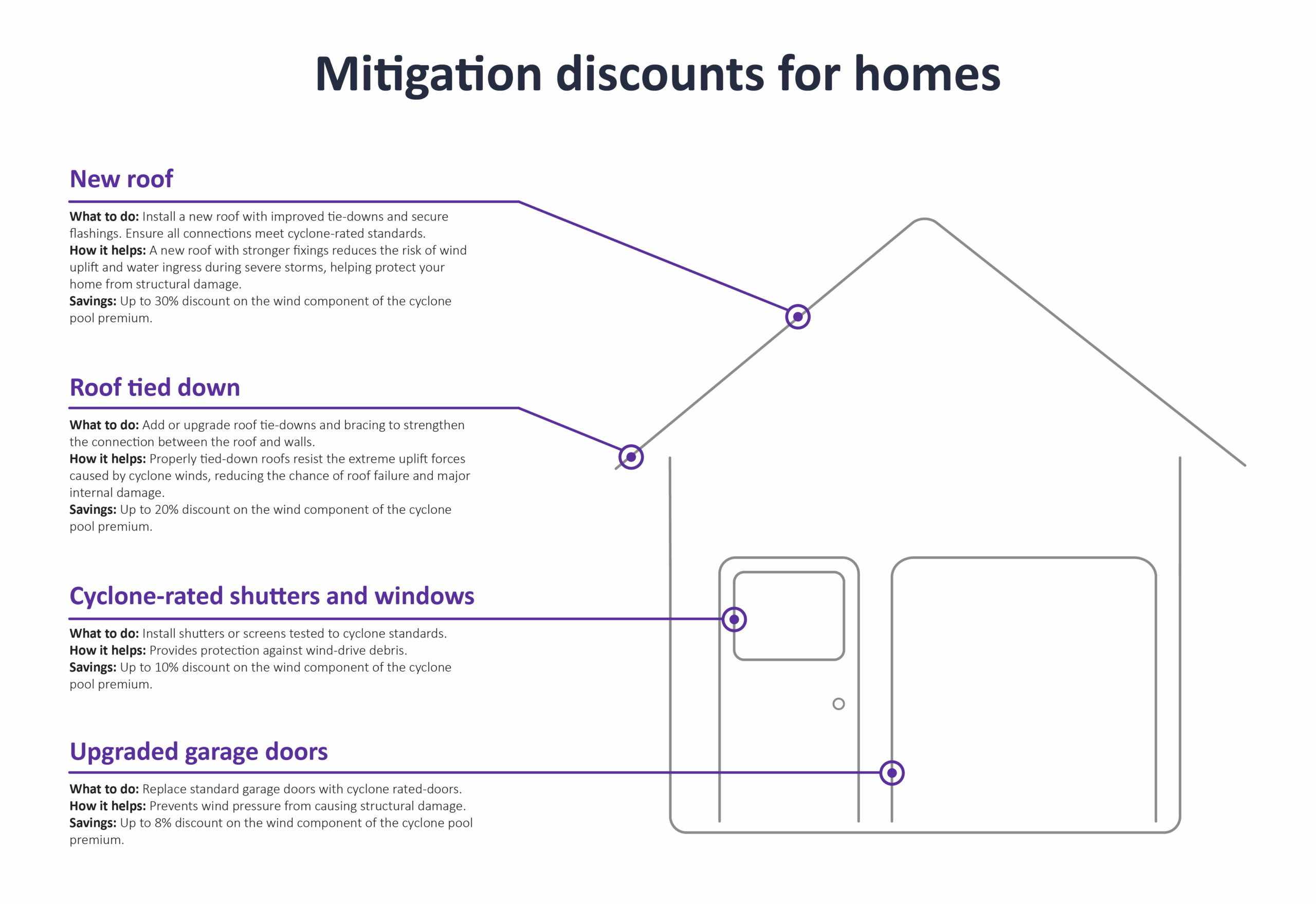
Many insurers offer discounts for cyclone-resilient upgrades, but eligibility can vary. Before starting any workor if you have mitigation measures already in placecheck with your insurer to confirm which upgrades they recognise and what evidence they need. Discounts are generally applied once you’ve finished the approved improvements and provided proof, such as receipts or photos. 

How do discounts flow through to customers? 

For homes covered under the cyclone pool, the process is a little different: 

If your home has recognised upgrades, your insurer may get a discount on the reinsurance premium they pay to the cyclone pool. 

Your insurer can then pass that saving on to you by reducing the part of your premium related to cyclone risk. 

How this appears in your final premium can vary between insurers, so it’s best to confirm with yours. 

Ask your insurer if you qualify. Below is a list of ARPC’s recognised risk-mitigation measures for homes and strata: 

Every insurer is different, so it’s important to:

  • Ask your insurer which measures they recognise before you pay for upgrades.
  • Keep receipts, invoices and any certification from licensed installers.
  • Take ‘before and after’ photos and keep a dated record.
  • Report the improvements to your insurer – they will advise next steps for applying any discount.

Why Preparing your Home Matters

Many homeowners feel more confident going into cyclone season when they’ve taken a few simple steps around the home. Whether you’re focused on easy weekend jobs or planning bigger improvements down the track, preparing your home is something you can do at your own pace.

You don’t need to do everything at once, even small improvements can make a noticeable difference over time:

  • A quick check of your gutters or window seals
  • A small repair you’ve been meaning to get to
  • Planning a future upgrade when you next renovate

These practical steps help reduce the chance of water getting inside and support the long-term strength of your home.

How to Strengthen Your Home

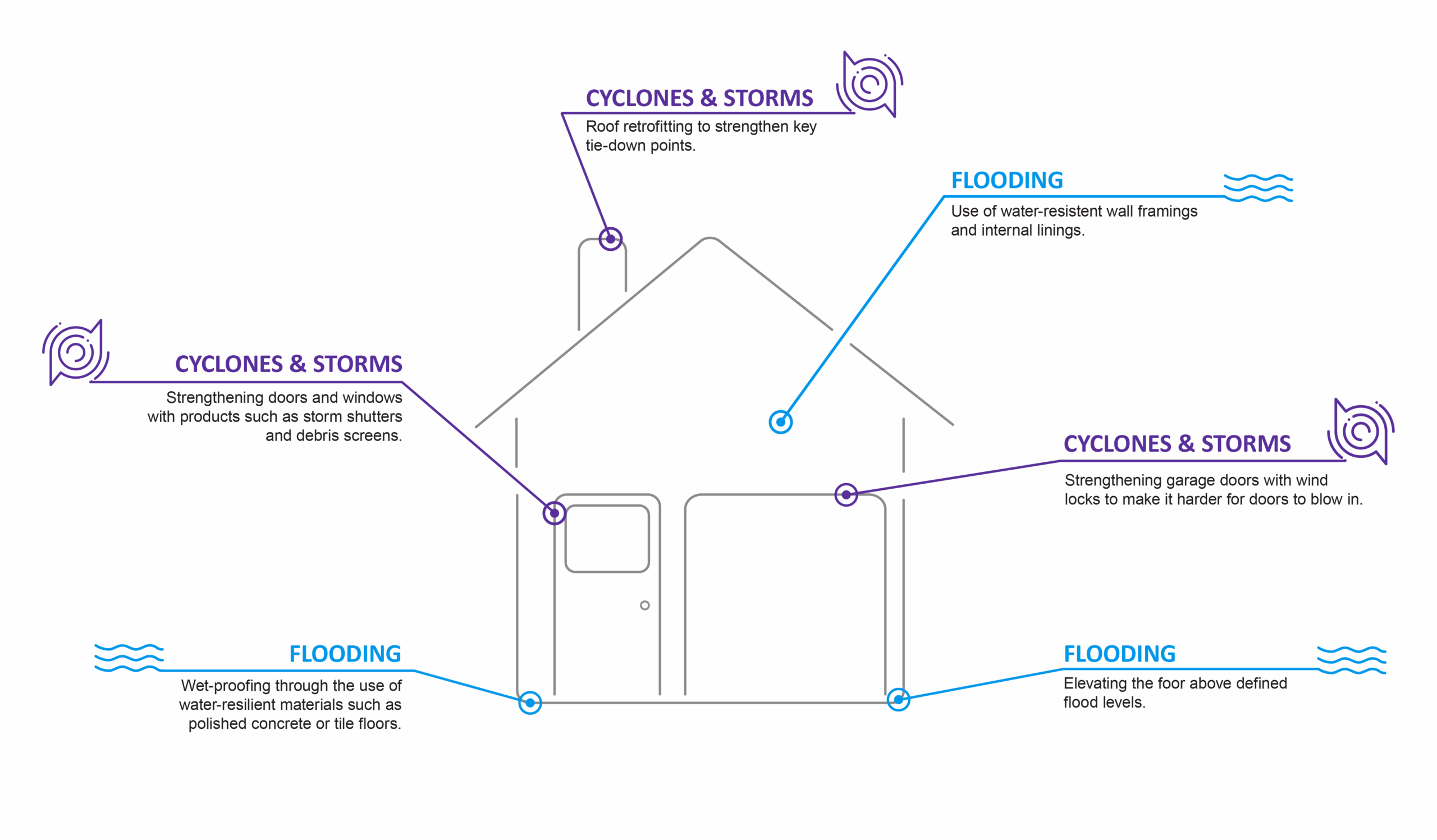
Maintaining your home or property is one of the best ways to protect it before a cyclone hits. These measures* may also be recognised by your insurer. Always check with your insurer before completing cyclone upgrades to your home and keep receipts/photos.

Cyclone Resilience Actions and Upgrades

Cost Level What you can do Why it helps

Low Cost < $1,000
(Quick, inexpensive, high impact)

Improve flashings and roof fixings
• Add/replace screws
• Ensure correct spacing
• Add closed-cell foam under flashings

Helps stop wind-driven rain being forced into the roof space.

Clean gutters & create overflows

Prevents water backing into eaves and walls.

Temporary plastic damming for windows

A taped plastic sheet inside the window can divert water and reduce internal flooding.

Seal and maintain paint, coatings & window seals

Worn paint and cracked silicone let water seep through walls and frames.

Close or temporarily seal roof vents

Reduces water entering through exposed openings during strong winds.

Fit sill flaps / retrofit weep hole covers

Sill flaps significantly reduce water entry during high wind and rain.

Cost Level What you can do Why it helps

Medium Cost $1,000 – $10,000
(Useful targeted upgrades)

Install debris-rated screens or cyclone-rated shutters

Protect windows and doors from pressure-driven rain and windborne debris.

Replace hollow-core entry doors

Solid doors with proper seals prevent flexing and water penetration.

Improve vents, downpipes & yard drainage

Better drainage stops water pooling and entering walls.

Cost Level What you can do Why it helps

High Cost $10,000 – $20,000
(Best considered during renovations)

Install new windows (awning or casement preferred)

Awning windows with compression seals perform best in cyclone conditions.

Add or replace sarking

Captures water under roofing and channels it safely to gutters.

Replace old roofing or cladding with improved tie-downs

Strengthens your home against wind uplift and reduces water ingress pathways.

*These costs will depend on factors like location, size, number of stories, and the age of a property. Speak to a certified builder for an accurate estimate based on your property and to understand the benefits any upgrades may deliver.

Funding support to boost your property’s cyclone resilience

Government programs and grants may help cover the cost of cyclone-resilient upgrades. Check available funding in your state or territory.

Homeowners

Homeowners in North and Far North Queensland affected by flood can access grants of up to $10,000 to rebuild their homes for long-term flood resilience. The Stronger Homes Grant program is jointly funded by the Australian and Queensland Governments. Eligible homeowners can use the grants for essential services like electrical switchboards, hot water systems and air-conditioning, data and electrical points, and help protect parts of their homes from flood damage.

Strata

The Strata Resilience Program which supports bodies corporate in Central and North Queensland to improve the resilience of their strata properties against cyclones. Under the program, the Australian Government will fund up to 50 per cent of disaster mitigation works, with the remaining funding coming from the QLD Government (25 per cent, up to $20 million), and Strata Title holders (25 per cent).

All property types

The Disaster Ready Fund administered by NEMA provides funding to assist governments, community groups and affected communities to reduce the impact of natural hazard.

Further information

For more practical information on how to prepare and act if your home is threatened by a cyclone, visit the relevant emergency services organisation in your state or territory.

Queensland
QLD Fire and Emergency Services – qfes.qld.gov.au

Northern Territory
NT Police and Emergency Services – pfes.nt.gov.au

Western Australia
Western Australia Department of Fire & Emergency Services – 
dfes.wa.gov.au

New South Wales
NSW SES emergency.nsw.gov.au

Useful resources
National Resilience Action Library by National Emergency Management Agency (NEMA) – nema.gov.au/our-work/resilience/ national-resilience-action-library

Weather the Storm by the Cyclone Testing Station at James Cook University, Geoscience Australia and the Bushfire and Natural Hazards CRC – weatherthestorm.com.au 

Frequently Asked Questions

Share

Do cyclone upgrades really make a difference?

Yes. Strengthening your home can make a big difference during a cyclone. Research from James Cook University shows that upgrades like stronger roof tie-downs, cyclone shutters, better window seals, and reinforced doors all help reduce damage when winds and rain intensify.

Even homes built to current standards can still experience water coming in during a cyclone. Simple improvements and regular maintenance can prevent this - helping keep the inside of your home dry and protected.

Upgrades don’t just reduce damage on the day of the cyclone. They can also help you avoid the smaller but frustrating issues that often lead to low-value insurance claims, such as minor leaks or damaged fittings. Preventing these problems can:

  • Save you paying an excess
  • Reduce the inconvenience of repairs and appointments
  • Avoid disruption to your daily life in the weeks or months after the storm

Strengthening your home is an investment in peace of mind, comfort, and long-term protection.

Will upgrades lower my insurance premiums?

Many insurers offer discounts for cyclone-resilient improvements, but it varies by provider and policy. Always check with your insurer before starting upgrades, keep receipts and photos, and report resilience upgrades to your insurer. Insurers may recognise upgrades such as roof tie-downs, cyclone shutters, and reinforced garage doors.

For homes covered under the cyclone pool, the discount applies to the part of your premium that covers wind damage during a cyclone. This is because upgrades like stronger roof connections and shutters reduce the risk of wind-related damage. Ask your insurer if you qualify and what evidence they require.

Which upgrades have the biggest impact?

Some insurers may offer a discount on your premium for resilience measures you’ve undertaken, so it’s always worth checking with your insurer before starting work.

The most effective upgrades include:

  • Roof tie-downs and bracing to prevent uplift
  • Cyclone shutters or impact-resistant windows to reduce wind and water ingress
  • Reinforced garage and roller doors to stop pressure build-up inside the home

Are there government programs to help with costs?

Yes. Funding programs and grants may be available in your state or territory to help cover the cost of cyclone-resilient upgrades. For example, Queensland’s Household Resilience Program offers subsidies for eligible homeowners. Check local government websites or our Funding Support section for details.

Why do some homes leak even if they meet building standards?

Cyclone winds push rain almost horizontally against windows and walls, and storm pressures can be much higher than current test standards. This means even compliant windows and doors can let in litres of water per minute during strong gusts. Simple actions like sealing roof vents, maintaining coatings, and adding sill flaps can prevent most water ingress.

How much do upgrades cost, and what support is available?

Costs may vary:

  • Low-cost actions ($): Clearing gutters, sealing vents, adding sill flaps - often under $1,000.
  • Medium-cost upgrades ($): Shutters, reinforced doors - typically $2,000 –$5,000.
  • High-cost upgrades ($$): Roof tie-downs or full window replacements - $10,000+.

Some insurers may offer a discount on your premium for resilience measures you’ve undertaken, so it’s always worth checking with your insurer before starting work.

Additional Government funding or support may be available for larger projects through state or federal resilience programs, so check current initiatives before you start (refer to Funding support to boost your property’s cyclone resilience section)

When should I start upgrading?

Ideally before cyclone season begins. Start with low-cost actions now (gutter cleaning, sealing vents, checking window seals) and plan larger upgrades over time or during renovations.

What are the easiest steps I can take today?

  • Clear gutters and add overflow points
  • Seal roof vents and check flashings
  • Install sill flaps on sliding windows
  • Tape plastic sheets inside windows before a storm
  • Repaint or reseal worn areas

These simple actions can prevent up to 80% of water ingress.

Login

Insurer logins to ARPC

PACE Login now requires Multi-Factor Authentication

ARPC has introduced Multi-Factor Authentication (MFA) to the PACE portal. This additional layer of protection helps safeguard your data and aligns with best practices for secure digital environments.

Cyclone Insurer Portal (PACE)

PACE Cyclone is ARPC’s Cyclone Reinsurance Pool (cyclone pool) insurer portal, which allows cyclone pool insurers to lodge their company information in a secure and user-friendly environment.

Terrorism Insurer Portal (PACE)

PACE Terrorism is ARPC’s new Terrorism Reinsurance Pool (terrorism pool) insurer portal, which allows terrorism pool insurers to lodge their company information in a secure and user-friendly environment.